It's Not Just the First Meeting. The Process Is Broken.
|


|
|
|
If you think you can, you're right!
If you think you can't, you're right!

Mindset matters a lot, and whether we have a growth mindset or a limiting mindset, we have room for improvement!
We aren't born with limiting beliefs. The young person's mind is a blank slate. The child wants to know "why"; to make sense of the world, to explore, to grow.
Then someone tells the child to "shush", to speak only when spoken to, that they don't belong here, that they have to behave a certain way, or that they won't amount to anything. I learned to be the class clown. It was my way of both getting attention and to hiding out. And it took many years for me to learn to take that mask off.
These beliefs are reinforced over time. The programming takes a set and we carry the beliefs forward into school and our careers. So much of what we do day-to-day, now, is based on the programming we received as young children.
And...that programming was delivered without intent, good or bad...just a passing comment from another person, perhaps a parent or a teacher. Something someone said casually to a five year old, without thinking, or really meaning anything...
The first step is to acknowledge that inner voice, the critic, the judge or saboteur.
Yes, I hear you.
The next step is to recognize that it is just a voice, a simple program running in our mind that can be erased and replaced with programs that serve rather than constrain us.
It's not who we are.
Yes, I hear you. Thank you for sharing. Now...go away, I have important things to do.
That voice who says "we are not good enough" or "we can't do it" or "we don't belong here" or "we are not worthy"...is just a voice. It's just old programming that never was relevant and certainly isn't relevant today.
Let it go!
We have work to do. If we are clear on our purpose, that inner critic gets drowned out by the roar of our purpose. My purpose is to help people transform and anything that doesn't help me to accomplish that purpose is just noise, to be ignored.
Authenticity
In sales, authenticity is critically important, just as important as curiosity. If we are authentic and curious and listen, we become trusted partners to our customers.
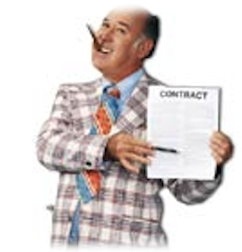
I work with principals of service organizations who have difficulty being authentic. They believe that they cannot sell, they don't want to be the caricature of the sales person, to be that guy!
And this belief, this programming, this internal saboteur keeps them from authentically sharing the passion for their services. When they let that image, that programming go, engagement with prospects increases dramatically and revenues skyrocket.
Similarly, I find many sales people, from SDR to key account director, harboring negative programming:
SDR: "I have nothing to offer an executive...I hope they don't answer the phone!" (How will that conversation go?)
Field rep: "I don't know all the technical details." (Your job as Listener in Chief and choreographer is to guide the customer through the process and connect them with technical and other resources)
KAD: "My job is to fulfill demand." (If that were your job, you'd be a fax machine!)
As sales people, our job is to be curious, to listen, to develop a point of view, to help the customer to see new opportunities. A negative mindset constrains us from playing all out in the game of improvisation that is high level sales.
A growth mindset allows us to take a longer view, to keep the customer's needs and goals in mind and to focus on helping them to be successful.
When they win, we win.
Our growth mindset allows us to connect with our customer's goals and initiatives.
When managing a key account team calling on Merck, I showed the team a "Merck for Mothers" banner displayed in the lobby at the company's headquarters. As part of this campaign Merck committed $650 million to ensure that no woman has to die while giving life.
We had a conversation about the banner, its impact on employees walking through the door each morning, and how the team can align to support that purpose. As a result, our conversations switched from the focus on middleware and CRM and databases to how we could better support the global Merck initiative.
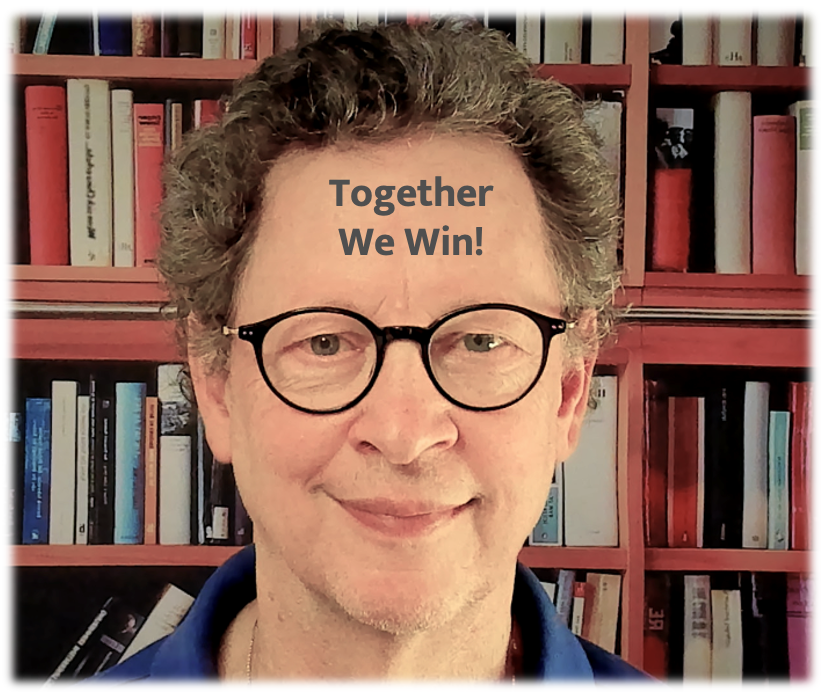
Your intent is written on your forehead
When our intent (or context) switches from "we want to sell you some stuff" to "we understand and support your strategic initiatives," both organizational and personal, it's visible.
Our intent comes through every word, every statement, every body movement. Customers know exactly what we're up to, what we're working towards, how we'll treat them in the short and longer term.
Together We Win
My personal intent (or context) is usually "Together We Win."
As someone who runs partnerships, delivers global sales enablement, coaches sales people and teams...I must work in partnership with others to deliver impact. In that partnership, I find dramatic leverage.
Even if we don't consciously set our intent, we always have specific, visible intent or context. Sometimes it's a simple "I have no freakin' idea" or "I can't wait to be done with this." When we do consciously set our intent, it's much more powerful!
Do this next!
Step one is to actively listen for that limiting self talk, that inner voice, the inner judge/critic/saboteur. (There's also an inner sage; we'll leave that for another time.)
When you hear that inner voice -- the one right now saying "what inner voice" -- just acknowledge it. "I hear you." That first step reduces its power and allows us to begin reclaiming our own power, autonomy, and joy!
For some, it only takes a few moments to completely eradicate that negative programming. For others the programming is so deeply ingrained into our belief of who we are that it can take longer.
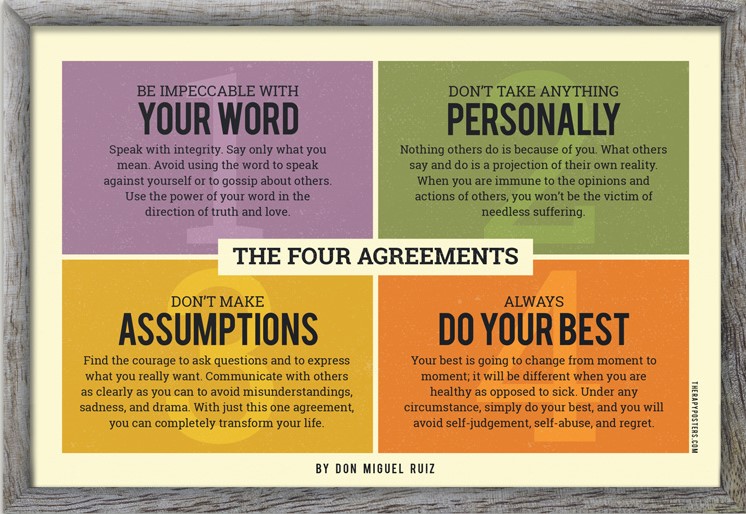
Step two is to begin the work on your Inner Game. I'd suggest reading The Four Agreements by Don Miguel Ruiz. While it's not specifically a book on sales, it is one of the best regarding mindset.
If you've already read it, then please reread it. Each time you'll bring new context to the reading and take away new learnings. I've reread it twice in the past year alone!
Need help?
If you need help building your positive mindset and the accompanying practices and habits that drive better customer engagement and results, please reach out to schedule an initial conversation.

And…account planning is distinct from an account plan.
Account planning is an ongoing process, involving multiple players — the KAD or SAM or lead sales person, the CSM, other pillar reps, relevant SEs and key customer stakeholders.
I explored the topic of account planning with Ulrik Monberg, CEO of ARPEDIO, last fall, for the Thoughts on Selling Podcast.
We have similar views on the topic of account planning, including the value of relationship maps and action plans. I also recorded a “Short Bytes” session on account planning best practices. Both are available via Spotify or Apple Podcasts.
Full disclosure…when I first launched the Acelera Group, focusing on account planning and pipeline development, I didn’t have an account planning platform strategy. In my prior experience, facilitating over 300 account planning sessions, and more than 30 key account planning sessions, at Oracle and Google, PowerPoint (and Google Slides) was my platform of choice. (Ulrik got a chuckle from that!)
It took only a few customers to ask “how do we scale this” for me to search for…and find…ARPEDIO as the answer to that question. Now customers can scale a highly effective account planning process across their entire organization, providing similar value and functionality for each sales team chartered with account planning.
By the way, late Q2 or early Q3 is a great time to conduct account planning sessions with customers to ensure a strong close to 2024. Let me know if you’d like assistance in developing a formal account planning framework or need facilitation for important customers.
Thanks!
Lee

If you'd like help ensuring success this year please reach out for an initial conversation.
Thanks!

Lee

Savvy sales leaders understand the rhythm of selling in a calendar year...in the first quarter (after territories and quotas are communicated to the field), sales people should be researching and prioritizing their accounts and planning their engagements.
In the second quarter opportunities should be developed, discovery conducted and value established. For larger accounts, account planning should be planned and held (with the customer's active participation. Your customers do attend your account planning sessions, right?)
In the third opportunities should be de-risked and customer commitments nailed down. Account planning should be continued. Executive briefings should be planned and hosted.
And...in the fourth quarter, deals should be closed.
There's only three challenges with this approach.
First, that's a lot of "shoulds."
With a formal structure in place, at the field level, and effective process facilitation, these important activities will happen, with effectiveness and impact.
Second, customers don't subscribe to the sales calendar...they have their own rhythm of business, whether their fiscal year ends in June, they have a fourth quarter freeze, or they simply have needs that aren't calendar bound.
Third, sales teams have a constant inflow and outflow of talent that requires retraining, new enablement and learning facilitation.
How much of this are you leaving to chance? Are you counting on a manager named Should to ensure the success of your team through the course of the year?
How did that work out for you last year?
What are you doing to ensure that these actions actually happen, with expediency and effectiveness?
If you'd like help ensuring success this year please reach out for an initial conversation.
Thanks!
Lee

He asked an interesting question: "why all the focus on value selling on your Thoughts On Selling podcast? I don't get it."
When I started to explain value selling to him, he cut me off. "Doesn't everybody sell this way? In professional services we've always focused on the customer."
That got me thinking. What's the difference between selling a product and selling a service?
With a product, you can point to its attributes - size, color, horsepower, storage capacity, number of CPUs or circuits, whether the LEDs are surface mounted, etc.
With a service, you have nothing to point to. It's an intangible. It doesn't exist outside of the experience of the service delivery (except perhaps for the simple "Want me to cut your grass?"...and even there value prop there is pretty obvious.
So...why do we focus on product attributes of the product rather than its ultimate value to the user?
Frankly, we're lazy.
It's what engineering driven/led organizations focus on...because it's comfortable. It's what the founders understand.
And we're swept up in the competitive leapfrog of "my widget is 10% shinier than the other company's widget."
We count on the prospect/buyer/user to make the jump from "high performance fabric" to "completing my analytics job this morning rather than tomorrow afternoon or next week." And that requires another couple of jumps..."if i can run many more analytics jobs (what-ifs) I can make better business decisions to improve product quality or employee retention or marketing efficacy or stock investments...which results in a higher bonus for me."
When I ran marketing, business development and sales enablement for an early cloud provider, we never talked about the technology behind our offerings. For our customers it was simply magic. Our focus was solely on helping clients to build scalable, performant environments so that they could provide up to date information to their subscribers. Major League Baseball didn't care how we did it, just that their subscribers would have a seamless experience from spring training to the last game of the World Series.
Most decision makers today don't care how things work, just that they deliver on their brand promise. The market is noisy and crowded, confusing buyers. Further, most buyers of larger ticket items (new ERP system, for instance) may have zero experience with evaluating and selecting a system and the details simply distract them, leading to "No Decision."
As sales leaders or sales enablers, we need to understand our buyers' challenges and opportunities, to empathize with them, and to shape our conversations and messaging accordingly.
One CIO told me: "I don't care how much better this is than our current environment; I'm not asking my team to learn another set of tools. They just don't have the bandwidth." Clearly we hadn't focused enough on the autonomous part of our Autonomous Data Warehouse offering conversation, describing how his team would not have to learn anything new.
Conversely, when I talked with the head of operations at a major airlines about the possibility of moving his analytics from a batched 24 hour look-back (what happened yesterday), to a realtime view of his operations (what's happening right now), he said this: "You can do that? I'll take two!" In this case, we had connected with his strategic goal of substantively improving his operational abilities.
Here's the jumping off point.
Because...value selling is not a thing to implement. It's a mindset, one that has to be shared from the top down. When it's done right, I've seen individual sales people grow their individual deal sizes by an order of magnitude or two. And when as CSO I implemented it at a mature business services firm, we increased sales by 75% in just over a year.
Where are you in this journey?
Thanks!

Lee
Account planning sessions are "sacred" events to me.
Never mind the staff cost of $20-$50K just for the sales team to show up and participate. Never mind the "interruption" to their normal responsibilities. Never mind the hours of research, planning and prep to ensure a great outcome.
It's the potential impact. We can substantively affect the outcome of a client's business when we conduct the proper research and planning. For a finserv account, perhaps it means that their customers will get loans rated faster and more accurately. For a manufacturing company, perhaps it means that we can help boost their production quality. And for a life sciences company, perhaps it means finding a cure for a disease more quickly.
Oh, and the team stands to benefit financially - making their numbers, receiving their commissions, going to Club.
When facilitating an account planning session, I always include three components:

With a good detailed action plan, people leave the session with a strong understanding of their roles, responsibilities, next steps and expectations (Change Management 101).
Yet, even a good action plan does not guarantee success. Success requires ownership and follow up. I've facilitated three hundred or so account planning sessions over the years, and I always charge the sales manager or sales leadership with owning that follow up - ensuring that the commitments people make are actually completed.
But, to be honest, I still haven't cracked the code on this. That follow up just doesn't always happen.
How do you ensure follow up to account planning sessions? To the promises made by your sales people?
By the way, if you don’t currently conduct formal account planning sessions, and want help in setting them up or facilitating them, let me know! (You do have to promise to follow up!)
Thanks!

Lee


The influence map is a key tool to help de-risk opportunities. If you leverage the influence map as part of your engagement and pursuit process, you are winning at a 20 to 40% higher rate and seldom, if ever, need to discount at the eleventh hour to close/win deals.
And if you aren't yet using influence maps, and would like assistance in implementing them, let me know!
While powerful, the influence map is just one part of a professional enterprise selling toolkit. I'll cover additional high value tools in coming days.
Thanks,

Lee
Over the past few months, a number of senior sales leaders have reached out for help, stating "we want to implement value selling."
They see value selling as a tool to unlock more value (revenue) or to improve their pipeline or to gain a competitive selling edge.
They are on the right path...value selling can certainly have a net positive impact on revenue, pipeline and competitiveness.
However, their perception of value selling and how it's implemented is a bit short sighted. Value selling is not a thing. You don't "implement value selling."

First and foremost, value selling is not a tool; rather, it's a mindset. Value selling is a way of thinking about how to engage with customers and requires a broad organizational commitment to putting the customer first.
Value selling focuses on the customer's strategic business goals (not technology habits). It focuses on the firmagraphics (the culture) of the buying entity (first mover/late adopter, risk taker/risk adverse, etc). It considers the needs/wants/desires of the individual stakeholders and contributors to the buying process. Value selling requires a specific focus on the use of language to align with those entities.
As a result, value selling is not something easily boiled down to Step One, Step Two, Step Three...
Instead, a value selling approach should be baked into onboarding, selling preparation, communications, actions and activities. And it requires an organization-wide change management process.
Opportunity planning and development, and its cousin, account planning, are great places to start.
Traditional opportunity planning starts with a profile of the target customer (focusing on installed base and potential budget) and the questions "what can we sell them and how much share can we steal from a competitor?" As this approach is highly transactional and competitive, it leads to sales with low profitability and mediocre customer satisfaction ratings. Sound familiar?
Value centered opportunity planning also starts with a profile of the target customer, but with a focus on strategic business goals, the gaps between goals and capabilities and the motivations of the organization and the key stakeholders. Reps or teams consider how they can help the organization to achieve these goals, independent of any product or service offering (Solution development comes much later.)
Value selling involves co-creation with the customer, and in many, perhaps most cases, doesn't have much impact on existing vendor relationships. It tends to focus on net-new value creation, generating far larger impact and results than a simple vendor substitution might.
There's no comparison of vendors' TCO in value selling. It's just not relevant. That's pocket fluff in comparison to the impact true co-creation offers. Why focus on shaving 10% in operating costs if the project could lead to a 20% increase in customer satisfaction or manufacturing quality. Most of the senior executives, the decision makers in a strategic project, will focus on the latter.

The team must consider "are we well positioned to help the customer achieve their goals?" Once the organizational goals are identified, the reps or teams develop an influence map that details the key stakeholders, the strength of the relationships, and an action plan to further develop those relationships.
Finally, the team develops powerful messaging that emphasizes alignment and ability of the team to help the organization achieve their strategic goals, and the ability of the individual stakeholders to meet their personal goals.
As with any strategic sales improvement project, the assistance of a knowledgeable sales enablement sherpa to provide direction and to carry the load is critical. If you don't get value selling right the first time, you won't get a second chance. Senior management...and the sales team...will move on to other shiny new objects.
Thanks!

Lee

People think that they buy based on data and analysis. But they don't. You don't. I don't. I buy the running shoes because they'll make me look faster on the trails or at Starbucks. You buy the solar panels or EV because it underscores your care for the environment. A coworker once told me that she was going to sell her 911 Cabrio to buy a Tesla (back when Tesla was cool)...because she wanted to save money on gas.
Um, no. She was going to lose thousands of dollars on the transaction, so the financial justification was weak. However, the new car was going to signal her care for the planet, which was her real motivation for the purchase.
Corporate buying is no different. Whether it's a new AI chatbot to improve the experience of your customer, or the repurchase of another thousand Chromebooks, at the base of the decision is feeling rather than data.
Here's a great quote on change management, and after all, selling is all about change management:


Here's the thing about value selling. It's not just a methodology...an approach to selling. It is a mindset, a way that sales people (and others) think about preparing for, and engaging with customers. To be successful, the mindset has to be present in everything the sales person does, or the initiative fails.
Here's the rub -- everyone else in the organization, and most of the practices and processes, is either product-centric or transactional in nature.
If you train your sales people to engage with customers focused on the business benefits of reducing risk and fraud, and your product managers focus on speeds and feeds, product/service attributes, a cognitive dissonance is created. Then the rep's manager focuses on inspection and forward movement of the opportunity, talking about pricing and contract terms. Obviously, the latter is important, but frequently it is delivered in opposition to the value selling approach/mindset.
At Oracle, the sales engineer was my primary line of reinforcement. I coached them to ask reps: "Do you have a business value hypothesis...". If the rep hadn't done the work to create a value perspective, I coached the SE to decline joining them on the sales call. The first line sales manager was my second line of reinforcement, providing a lot of coaching on business value.
We had the benefit of high level executive support for our value selling approach. It helped that many senior sales executives had risen from the ranks, had been trained on value selling and saw their average deal size grow dramatically.
Conversely, in a more recent situation, value selling was deemed a "good thing to do." And it was done. Well done, by some very senior and knowledgeable people, people who have done it well elsewhere. But it was not supported in the field by sales management, it had little to no real executive support, and product management had to be coached, over and over, to recast their product enablement assets to be more supportive of a value selling approach. It has not really taken hold and as a result has delivered little real value.
So...value selling is a mindset, one that has to be shared by all the relevant stakeholders, and actively supported by senior management. And as such, your primary challenge is that of change management. How will you to change the hearts and minds of the stakeholders so that your investment in value selling pays off, so that sales people can focus on the value to be co-created with customers?
Looking forward to your comments!
Thanks!
Lee